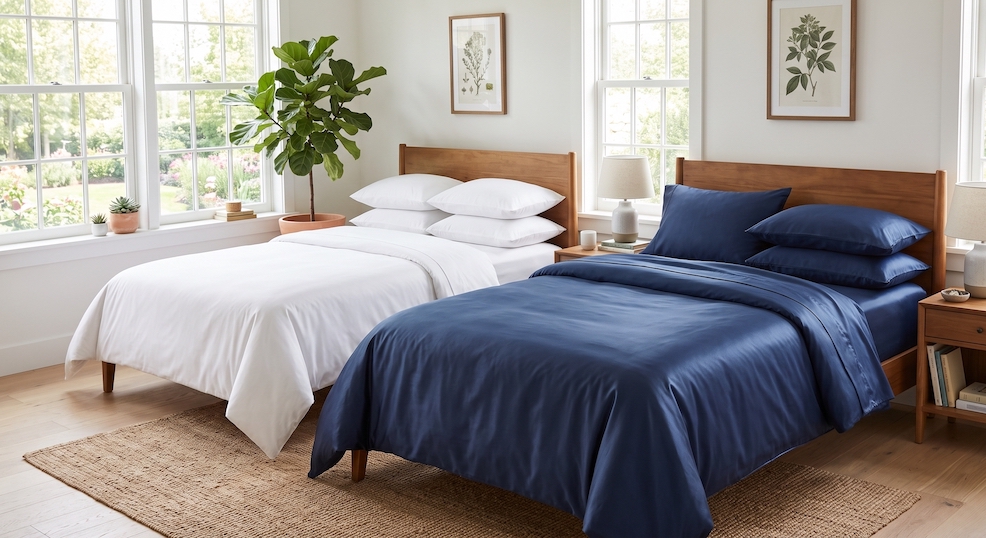
Shop Premium Bed Sheets made for comfortable sleep. Compare fabrics, weaves, fit details, care needs, and prices to find bedding that suits your bedroom.
A good set of sheets changes how a bed feels every single night. Some feel cool and crisp, others smooth and heavy, others relaxed and slightly rumpled. Which one is “best” depends on how you sleep, not on the label.
The price tag alone will not tell you much. Fiber, weave, fabric weight, mattress depth, and how you plan to wash them all play a part. Comparing these points before you buy helps you avoid paying extra for features you will never notice.
This guide covers the main materials, weaves, sizing checks, price factors, and care habits so you can choose sheets that fit your room, your budget, and your routine.
What Should You Look for in Premium Bed Sheets?
Start with the fabric itself rather than a single big number on the packaging. Fiber type shapes softness, airflow, strength, texture, and upkeep.
Before adding a set to your cart, check:
- Fiber content and percentages
- Weave type
- Mattress size and height
- Fitted-sheet pocket depth
- Washing and drying instructions
- Pieces included in the set
- Textile certifications
- Return or trial policy
- Reviews that mention fit and washing results
Which Sheet Materials Are Worth Comparing?
Each fabric creates a different sleeping surface. Think about the temperature you sleep at, the texture you like, and how much effort you want to put into laundry.
Cotton
Cotton is the most familiar choice. It is breathable, generally easy to care for, and available at nearly every price. Longer fibers usually produce smoother, stronger yarn, so the quality of the cotton matters more than the word “cotton” itself.
Linen
Linen is made from flax and has a natural, textured look. It allows plenty of airflow and tends to soften with use. It often costs more than cotton and wrinkles easily, which many buyers see as part of its relaxed appeal.
Microfiber and Blends
Polyester-based microfiber and cotton blends are usually budget friendly and resist wrinkles. They can hold more heat than natural fibers, so warm sleepers may prefer other options.
Bamboo-Derived Fabrics
Sheets sold as bamboo are typically viscose or lyocell made from bamboo pulp. They often feel smooth and drape well. Read the product description closely to see exactly how the fabric is made and how it should be washed.
Sateen vs. Percale: What Is the Difference?
Weave changes the feel of a fabric even when the fiber is the same.
Sateen
Sateen has a smooth surface with a soft sheen and a slightly heavier drape. It suits people who like a silky feel and a polished look. It can run a little warmer and may show wear sooner if the yarn is poorly made.
Percale
Percale uses a plain over-under weave that gives a crisp, matte, lightweight finish, similar to many hotel beds. It is a common pick for people who sleep warm.
Neither is better in every case. Your sleeping temperature and texture preference should decide it.
Bed Sheet Material Comparison
| Material or Weave | Typical Feel | Temperature | Upkeep | Good Match For |
|---|---|---|---|---|
| Cotton | Soft and familiar | Balanced | Easy | Everyday bedding |
| Sateen | Smooth with a slight sheen | Slightly warmer | Moderate | Softness-focused sleepers |
| Percale | Crisp and light | Cooler | Easy | Warm sleepers |
| Linen | Textured and airy | Cooler | Moderate | Relaxed, breathable bedding |
| Microfiber | Smooth and light | Warmer | Easy | Budget-minded shoppers |
| Bamboo-derived | Smooth and drapey | Balanced to cool | Moderate | Shoppers who like a fluid feel |
Actual results vary with fiber quality, fabric weight, construction, and finishing.
Does Thread Count Matter?
Thread count is the number of threads woven into one square inch of fabric. It says something about construction, but a bigger number does not guarantee a better sheet.
Very high figures can come from counting each strand of multi-ply yarn separately, which makes the number look better than the fabric feels. Fiber quality, yarn, weave, and finishing often matter more.
A well-made sheet with a moderate count can outperform a poorly made one with an enormous count. Look at customer feedback after several washes to see how a set really holds up.
Check Your Mattress Depth Before Buying
Fit affects comfort as much as fabric. Standard fitted sheets can pop off thick mattresses, pillow tops, and toppers.
Measure from the bottom edge of the mattress to its top, including any topper you use. Then compare that with the pocket depth listed by the manufacturer. Terms like “deep” and “extra deep” are not standardized, so go by the measurement.
A sheet that is too shallow will slip at the corners. One that is far too big will bunch under you.
How Much Should Premium Bedding Cost?
Prices depend on fiber, construction, set size, certifications, and brand. Decent cotton sets are available at modest prices, while premium cotton or linen sets can pass $100, and luxury collections can cost several hundred dollars.
Rather than treating a high price as proof of quality, ask:
- What exact fabric am I paying for?
- Are pillowcases included?
- Is the pocket depth right for my mattress?
- How must it be washed?
- Is there a return or trial period?
- Can I replace a single piece later?
Cost per use can help too. A sturdier set that lasts for years may cost less over time than a cheap set you replace often.
Should You Buy a Set or Individual Pieces?
A typical set includes a fitted sheet, a flat sheet, and one or two pillowcases, though contents vary by size and seller. Sets are convenient when you need everything at once.
Individual pieces make sense if you skip the flat sheet, want extra pillowcases, or need a specific size. Always check what is in the box before comparing prices, because a lower price may simply mean fewer pieces.
How Can You Judge Sheets When Shopping Online?
You cannot touch the fabric online, so the details matter. Look for clear fiber percentages instead of vague wording. Then scan reviews for repeated comments about:
- Shrinking
- Pilling
- Loose elastic
- Corner fit
- Fabric thickness
- Color fading
- Softness after washing
A single complaint tells you little. The same complaint repeated by many buyers is worth taking seriously.
Do Certifications Help?
Certifications can add useful information. OEKO-TEX STANDARD 100, for example, relates to testing textiles for specified harmful substances, while organic claims are covered by separate systems. Check the exact certification named instead of assuming words like “natural” or “eco” carry a fixed meaning.
How Many Sets Do You Need?
Two or three sets per bed works for most homes: one on the bed, one clean and ready, and one spare or seasonal. That way you never wait on the dryer to make the bed. If storage is tight, two sets is usually enough.
How Can You Make Sheets Last Longer?
Good care slows wear. Follow the label first, since each fiber has different limits. Other helpful habits include:
- Washing sheets apart from rough items such as jeans or towels
- Using the recommended amount of detergent
- Not overloading the washer
- Avoiding high heat unless the label allows it
- Rotating between sets
- Storing clean sheets somewhere dry
Which Sheets Suit Hot Sleepers?
Percale cotton and linen are popular because they let air move. Even so, your mattress, blankets, and room temperature also affect how warm you feel. Removing a layer can help more than changing sheets.
Which Sheets Feel Softest?
Softness is personal. Sateen tends to feel smooth right away, while linen usually softens after repeated washing. If you are sensitive to texture, buy from a seller with an easy return policy.
Final Buying Checklist
- Exact fiber content
- Weave type
- Mattress height and pocket depth
- Pieces included
- Care instructions
- Certifications, when relevant
- Return or trial policy
- Replacement-piece availability
- Total price compared with similar fabrics
Frequently Asked Questions
Are expensive sheets always better?
No. Price can reflect better fibers, but it can also reflect branding, packaging, or where the sheets were made. A higher price does not guarantee you will like the feel.
Is a higher thread count always better?
No. It is only one measure. Fiber, yarn, weave, and finishing can matter just as much.
How often should sheets be washed?
Many households wash them about once a week. Pets, allergies, climate, and personal habits can change that. Follow the care label.
What fabric works for warm weather?
Lightweight percale cotton and linen are common choices because they allow airflow.
Should a fitted sheet be tight?
It should stay snug on the mattress without being stretched to its limit. Measuring mattress height first helps you pick the right depth.
How do I know if sheets are worth the price?
Compare fiber content, construction, pocket depth, care needs, certifications, return terms, and verified reviews. These tell you more than price or thread count alone.
Choose Sheets That Match How You Sleep
The right sheets should fit your mattress, feel good against your skin, survive regular washing, and suit your routine. Compare measurable details instead of luxury labels, and you are more likely to end up with bedding you enjoy for years.