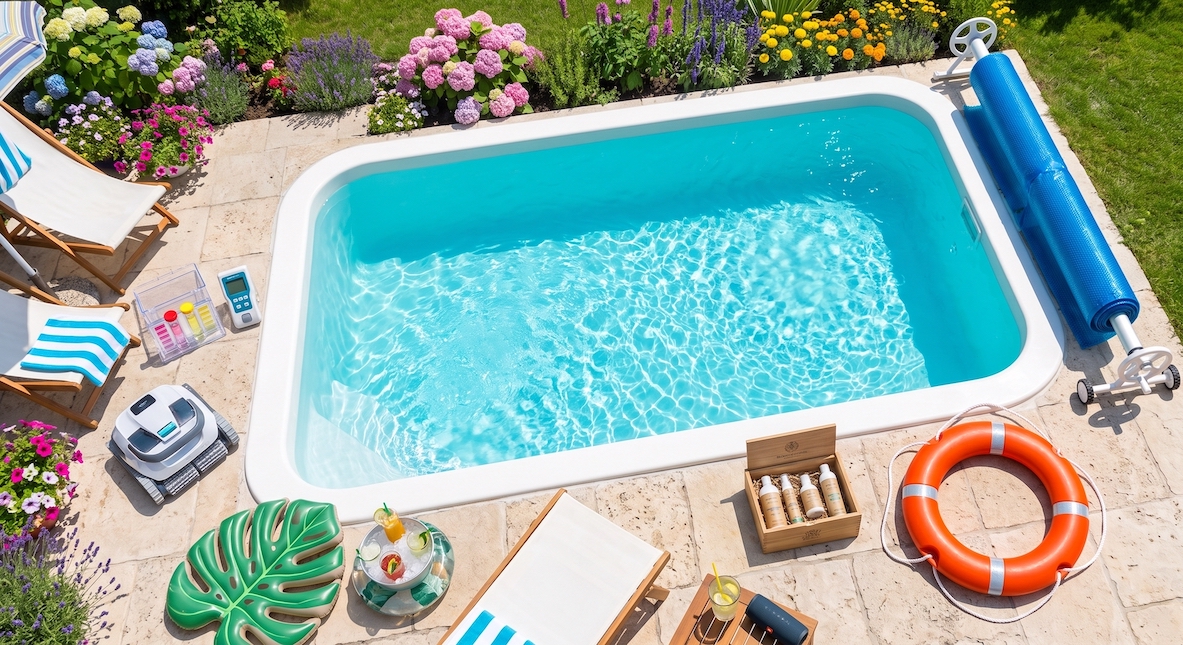
Owning a pool is a great way to cool off, exercise, and entertain, but it comes with regular work. The right supplies make maintenance faster, keep the water safe, and protect your investment. The wrong ones (or missing ones) lead to green water, damaged equipment, and costly repairs.
This guide lists the essential items every pool owner should have, grouped by category, plus water chemistry targets, a simple weekly routine, and what pool ownership typically costs. Use it as a shopping checklist whether you have just bought a house with a pool or are building one.
Quick Checklist: Essential Pool Items
- Equipment: pump, filter, skimmer and strainer baskets, return jets, timer or controller
- Chemicals: chlorine (tablets, liquid, or granular), pool shock, pH increaser and decreaser, alkalinity increaser, calcium hardness increaser, stabilizer (cyanuric acid), algaecide, clarifier
- Testing: test kit or strips, digital tester or smart monitor
- Cleaning tools: telescopic pole, leaf skimmer net, leaf rake, wall and floor brush, manual or automatic vacuum, vacuum hose, tile and waterline cleaner
- Safety gear: fence and self-latching gate, pool alarm, safety cover, life ring, rescue (shepherd’s) hook, first aid kit, signs, phone nearby
- Covers: safety cover, solar cover, winter cover
- Maintenance tools and spares: basic hand tools, O-rings and lubricant, spare baskets, filter cartridges or sand, fuses, gaskets
- Comfort and fun: heater or solar heating, lighting, steps and ladders, loungers, shade, towels, toys
- Storage and seasonal items: chemical storage, hose and reel, winterizing kit, drain plugs
- Paperwork: insurance, permits, warranties, maintenance log
1. Core Pool Equipment
Pump
The pump circulates water through the filter and heater. Pumps are usually the largest source of electricity use in a pool, and variable-speed pumps can reduce running costs compared with single-speed models.
Filter
The filter removes dirt and particles. The main types are sand, cartridge, and diatomaceous earth (DE), each with different maintenance needs and filtering fineness. Know which type you have and how to clean or backwash it.
Skimmer and Strainer Baskets
Skimmer baskets catch leaves and debris before they reach the pump, and the pump strainer basket protects the pump itself. Keep spare baskets on hand, since cracked baskets let debris through.
Timer or Automation Controller
A timer runs your pump on a schedule. Smart controllers let you control pumps, lights, and heaters from a phone.
Automatic Cleaner or Pool Robot (Optional but Popular)
Robotic cleaners scrub the floor and walls and save time on manual vacuuming. Suction and pressure-side cleaners are other choices.
Heater and Solar Heating (Optional)
Gas, electric heat pump, or solar heaters extend your swimming season. Solar covers also reduce heat loss.
Salt Chlorine Generator (Optional)
Saltwater systems make chlorine from salt in the water. They reduce handling of chlorine products but still need regular testing and balance.
2. Pool Chemicals
Water chemistry keeps the pool safe and protects the surface and equipment. Store chemicals separately, in their original containers, away from heat and children, and never mix different chemicals.
- Sanitizer: chlorine tablets, liquid chlorine, granular chlorine, or bromine
- Shock: pool shock (chlorine or non-chlorine) for periodic deep sanitizing after heavy use or rain
- pH increaser (soda ash) and pH decreaser (muriatic acid or dry acid)
- Alkalinity increaser (sodium bicarbonate)
- Calcium hardness increaser
- Stabilizer or conditioner (cyanuric acid): protects chlorine from sunlight
- Algaecide: helps prevent and treat algae
- Clarifier or flocculant: helps clear cloudy water
- Metal sequestrant and stain remover: where water has metals
- Enzymes (optional): help break down oils and organic matter
- Filter cleaner: for cartridge and DE filters
Target Water Levels
| Measure | Typical target | Why it matters |
|---|---|---|
| Free chlorine | At least 1 ppm without stabilizer, at least 2 ppm with stabilizer (many home pools run about 1 to 4 ppm) | Kills bacteria and algae |
| pH | 7.0 to 7.8 (many owners aim for about 7.2 to 7.6) | Comfort, chlorine effectiveness, equipment protection |
| Total alkalinity | About 80 to 120 ppm | Keeps pH stable |
| Calcium hardness | About 200 to 400 ppm | Protects plaster and equipment |
| Cyanuric acid (stabilizer) | About 35 to 60 ppm (salt pools often differ) | Protects chlorine from the sun |
These are general guidelines. Your pool surface, sanitizer type, and local advice may call for different ranges, so follow your pool builder’s or manufacturer’s recommendations.
3. Water Testing Supplies
- Liquid test kit (drop-based): generally the most accurate for home use
- Test strips: quick and convenient for daily checks
- Digital or smart pool monitor (optional): tracks levels and sends alerts
- Replacement reagents: test chemicals expire, so replace them yearly
- Local pool store water test: a good way to double-check your results now and then
4. Cleaning Tools
- Telescopic pole: the handle for most tools
- Leaf skimmer net: for surface debris
- Leaf rake or bag net: for leaves on the bottom
- Pool brush: nylon for vinyl and fiberglass, stainless steel only if your surface allows it
- Manual pool vacuum head and hose, or a robot or automatic cleaner
- Tile and waterline brush or cleaner
- Skimmer sock or filter bags (optional)
- Garden hose and nozzle: for rinsing tools and topping up water
- Chlorine floater or feeder: to dispense tablets steadily
5. Pool Safety Equipment
Safety comes first, especially with children and pets around. Local laws often require specific barriers and alarms, so check your area’s rules.
- Fence with a self-closing, self-latching gate around the pool
- Pool and door alarms
- Safety cover when the pool is not in use
- Life ring or buoy with a rope
- Rescue (shepherd’s) hook
- First aid kit
- Clearly posted rules and depth markers
- Non-slip surfaces and good lighting
- A phone kept within reach in case of emergency
- Training: CPR for adults, and swim lessons for children
- Drain covers that meet safety standards
6. Pool Covers
- Safety cover: blocks access and supports weight, in addition to keeping debris out
- Solar cover: reduces evaporation and helps heat the water
- Winter cover: protects the pool when closed for the season
- Cover pump and cover reel (optional)
7. Maintenance Tools and Spare Parts
- Screwdrivers (Phillips and flathead)
- Pliers and adjustable wrenches
- PVC cutter or hacksaw and tape measure
- Pool-safe lubricant and spare O-rings and gaskets
- Spare skimmer and pump baskets
- Spare filter cartridges, sand, or DE as needed
- Teflon tape and plumbing sealant
- Spare fuses, bulbs, and timer parts
- Owner’s manuals and a list of your equipment model numbers
8. Comfort, Heating, and Fun
- Pool heater or solar heating
- Underwater or LED pool lighting
- Steps, handrails, and ladders
- Loungers, umbrellas, or shade structures
- Towel storage and outdoor rugs
- Floats, toys, and pool games
- Outdoor speakers and seating
- Pool thermometer
9. Storage and Seasonal Supplies
- Chemical storage: a cool, dry, ventilated, locked space away from children
- Hose and reel
- Winterizing kit: winter chemicals, plugs, air pillow, and antifreeze for pipes where needed
- Opening kit: shock, algaecide, and test supplies for spring start-up
- Protective gear: chemical-resistant gloves, safety goggles, and a mask for handling chemicals
10. Paperwork and Planning
- Homeowner’s insurance that covers the pool and liability
- Permits, inspection records, and safety compliance paperwork
- Equipment warranties and receipts
- A maintenance log for chemical readings and service dates
- Contact details for a local pool professional and a repair service
A Simple Weekly Pool Routine
- Skim the surface and empty the skimmer and pump baskets.
- Brush the walls, steps, and waterline.
- Vacuum the pool floor or check the robot.
- Test the water, then adjust chlorine, pH, and alkalinity.
- Check the filter pressure and clean or backwash when needed.
- Add shock or algaecide if the water needs it.
- Check the water level and top up if low.
- Inspect the fence, gate, and safety gear.
What Does Owning a Pool Cost?
Costs vary widely by location, pool size, equipment, and whether you do the work yourself. Typical estimates published for homeowners include:
| Cost | Typical estimate |
|---|---|
| Do-it-yourself upkeep (in-ground) | About $1,200 to $3,000 per year |
| With a weekly service | About $2,400 to $5,000 per year |
| All-in annual cost (including electricity, water, and repairs) | Often cited at roughly $4,000 to $12,000 |
| Pump electricity | About $50 to $150 per month, depending on pump size and run time |
| Chemicals | About $500 to $800 per year for a standard pool |
| Water | About $4 to $20 per month more on your bill |
| Insurance | Often an extra $20 to $25 per month, and a pool may raise property taxes |
Figures come from published homeowner cost guides and vary by region and pool type. Treat them as rough estimates.
Tips for New Pool Owners
- Test the water often, especially in hot weather and after heavy use or rain.
- Run the pump long enough each day for the water to circulate and filter properly.
- Keep chemicals out of children’s reach and never mix them.
- Add chemicals one at a time and let the water circulate between additions.
- Keep tree branches, leaves, and debris away from the pool.
- Learn your equipment, and know where the shut-off valves are.
- Ask a local pool professional for a start-up demonstration if you are new.
Frequently Asked Questions
What do I need for a new pool?
At a minimum: a working pump and filter, sanitizer and balancing chemicals, a test kit, a skimmer net and brush, a vacuum, safety barriers, and a cover.
How often should I test pool water?
Many owners test two to three times a week in swimming season, and more often during heat waves or heavy use.
What is the most important pool chemical?
A sanitizer, usually chlorine, which keeps the water safe from bacteria and algae. Balanced pH and alkalinity make the sanitizer work properly.
Do I need a pool cover?
It is strongly recommended. A cover improves safety, keeps out debris, reduces evaporation, and can lower heating costs.
Is a robot cleaner worth it?
Many owners find it saves a lot of time. If you enjoy manual vacuuming or have a small pool, a manual vacuum works too.
How much does pool ownership cost per year?
Estimates range from about $1,200 to $3,000 for DIY upkeep to several thousand dollars with service and repairs, depending on your pool and region.
Final Thoughts
A well-stocked pool means less stress and a safer, cleaner swim. Start with the essentials of equipment, chemicals, testing, cleaning tools, and safety gear, then add comfort items over time. Build a simple weekly routine, keep a log, and do not hesitate to ask a local pool professional for help.
This article is general information. Pool safety rules, chemical handling requirements, and building codes vary by location. Follow product labels, local regulations, and professional advice, and consult a licensed pool professional for equipment or safety questions.